

Cooking · Seasonal
Catch the peaches before they go
The last peaches of the year want fire, not a pie.
 September 2026
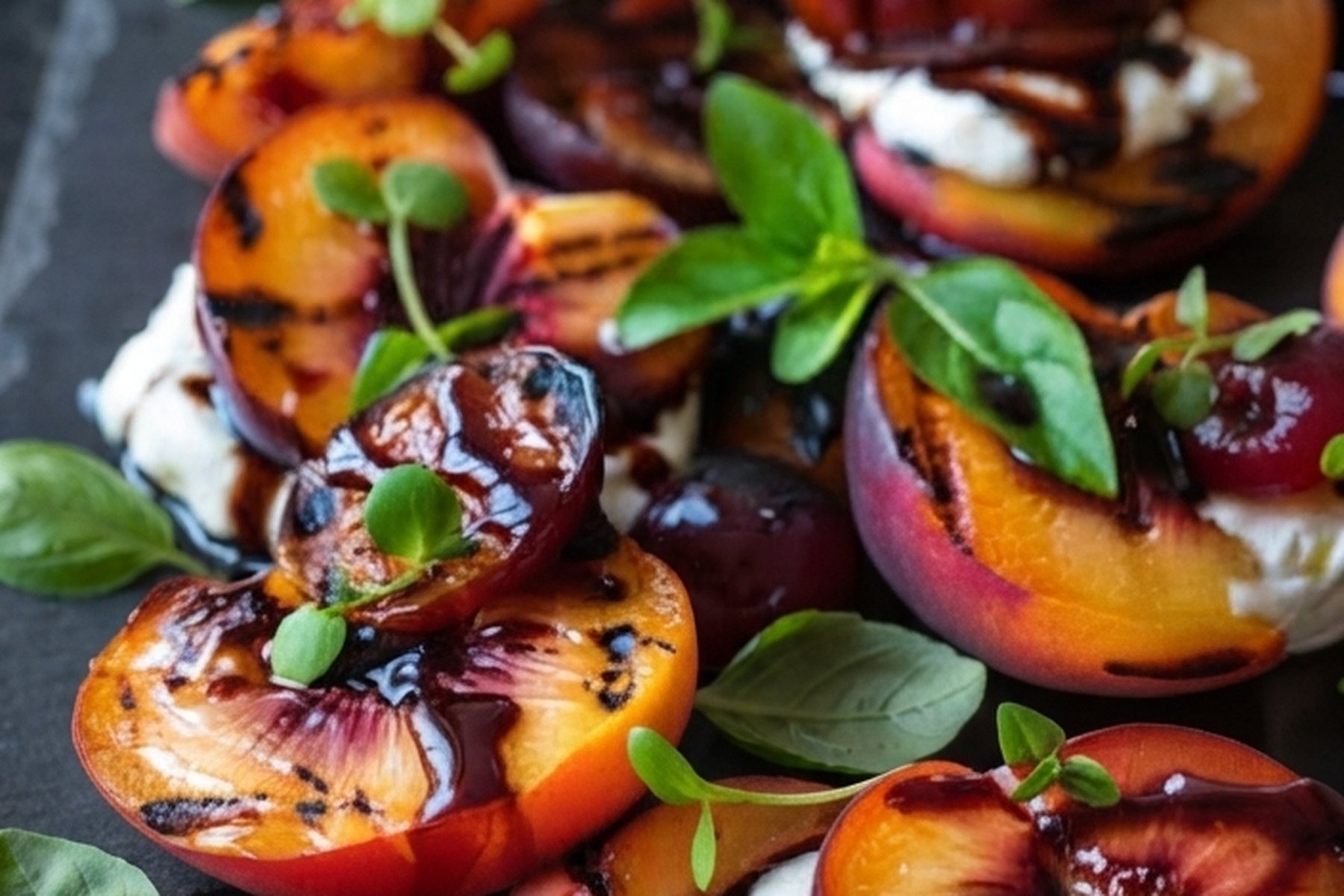
There's a two-week window at the end of September when stone fruit is still around and nobody's paying attention to it anymore. Everyone's moved on. The pumpkin stuff is out, the squash is stacked at the front of the store, and the peaches have been pushed to the back of the shelf where the light is worse.
Buy them. This is the best they get.
Late fruit has had the whole summer to sit on the tree. The sugars are concentrated in a way July fruit never manages, because July fruit is picked early to survive the trip. What's left now is either local or nearly so, and it tastes like it. The flavor's deeper. Slightly wine-ish around the pit. It's the difference between a peach that's sweet and a peach that tastes like something.
And it doesn't last. By mid-October you're into cold storage and mealy texture and that dry cottony thing where the fruit falls apart in your mouth without ever tasting like fruit. So: now, or wait eight months.
Firm-ripe, and I mean it
This is the whole recipe. Everything else is assembly.
You want fruit that gives slightly under your thumb at the shoulder — right where the stem was — and stays firm everywhere else. It should smell like a peach when you hold it near your face. If it doesn't smell like anything, it isn't ready and it isn't going to get there in a pan.
What you're avoiding is soft. Soft fruit is delicious and it is completely useless on a grill. The flesh collapses the second it hits heat, the sugars run out of it, and you end up scraping something that was almost jam off the grates with a spatula while the halves fall apart in your hands. I've done it. It's a sad thing to stand over.
Too firm has the opposite problem and it's the more common mistake. Underripe fruit won't caramelize — there isn't enough sugar at the surface to take color. You'll get grill marks and raw fruit underneath, and heat won't ripen it. Heat just cooks it.
So: gives at the shoulder, firm at the equator, smells like itself. Peaches, nectarines, plums, apricots, pluots. Plums hold the best and go the most jammy. Apricots are the most fragile and the most worth it.
If your fruit is already soft, don't fight it. Slice it over yogurt and get more fruit.
What the balsamic is actually for
Honey on its own is a dead end here. You've got fruit sugar plus more sugar and nothing pushing back, and after three bites it flattens out and starts tasting like candy.
Balsamic is the acid and the bitterness both. It cuts the sweetness so your mouth resets between bites, and the slight tannic edge of a decent aged vinegar gives the whole thing a floor to stand on. That's why it works where lemon juice wouldn't — lemon brightens, which isn't the problem. The problem is depth.
Use the real thing if you have it. The thick syrupy kind needs almost none. Supermarket balsamic is fine, just reduce it a little first so it thickens and the harsh edge cooks off.
Thyme is doing the third job. Fruit and vinegar and honey are all round, soft flavors, and thyme is the one sharp, resinous, slightly savory thing in the bowl. It keeps the whole plate from reading as dessert when you don't want it to. My mother would have used mint and it's also good, but mint pushes it sweeter and thyme pulls it the other way.
Where it goes
Straight out of the pan with vanilla ice cream is the obvious one, and I'm not going to pretend it isn't the best one. Hot fruit, cold ice cream, the syrup going cloudy where it hits — nothing wrong with obvious.
But this is a savory dish as easily as a sweet one. Put it next to pork, which is what it's really built for. A chop, a roast, anything fatty enough to want acid. Grill the fruit while the meat rests and spoon the pan syrup over both.
Burrata and grilled bread and a handful of arugula turns it into a first course. Ricotta with olive oil and flaky salt is the same idea with less fuss. Crumbled feta, if you want the salt louder.
And it's good cold the next morning, on toast, standing at the counter. That's how most of mine get eaten.
A note on the grill
You don't need one. A grill pan does this, and honestly a regular skillet does it fine — you lose the char lines and gain a better caramelized surface, which is an even trade.
Hot pan, cut side down, oil the fruit and not the pan. Don't move it. Three minutes, maybe four. You'll know because the kitchen will tell you.
Then the honey and vinegar go in at the very end, off the direct heat, so they thicken rather than burn. Sugar scorches fast and the difference between amber and black is about eleven seconds.
Make it this week. The window's closing.
Grilled stone fruit with balsamic, honey and thyme
Ingredients
- 4 firm-ripe peaches or plums, halved and pitted
- 1 tbsp neutral oil
- 3 tbsp honey
- 2 tbsp balsamic vinegar
- 2 tbsp unsalted butter
- 6 thyme sprigs
- ¼ tsp fine salt
- Vanilla ice cream, thick yogurt or ricotta, to serve
Method
- Heat the grill to medium-high and let the grates come up properly. Scrub them and wipe with an oiled towel — fruit sticks to a dirty grate and tears when you turn it.
- Simmer the honey, balsamic, butter and salt together for two minutes, until it thickens enough to coat the back of a spoon. Strip the leaves from two thyme sprigs and stir them in. Take it off the heat.
- Brush the cut sides of the fruit with oil. Only the cut sides — the skin side is fine on its own.
- Lay the halves cut-side down and leave them alone. No moving, no pressing, no checking. Four minutes, maybe five for big ones. You want dark char lines and caramelized edges.
- Turn them skin-side down, spoon glaze into each hollow, and close the lid for three or four minutes. They should soften through but still hold their shape on the tongs.
- Move to a platter cut-side up, spoon over the rest of the glaze, and tuck the remaining thyme around them. Rest five minutes — they're brutally hot inside.
- Serve with something cold while the fruit is still warm. Any juice left on the platter goes over the top.
No grill? A cast iron pan over high heat does this well — get it properly hot first. If the fruit is already soft, roast it cut-side up at 425°F for 15 minutes instead. Same glaze, same result, no char lines.